

2025 Sustainability & Responsible Travel Progress Report
2025 marks a structuring milestone in Asia My Way’s sustainability journey. This publication consolidates the environmental, social and governance initiatives implemented or initiated across our destinations during the reporting period.
Operating across diverse Asian contexts requires progressive alignment rather than uniform standardisation. Sustainability integration evolves according to local regulatory environments, infrastructure capacities and operational realities. This report reflects a consolidation phase, highlighting concrete milestones achieved in 2025, areas under development, and priority actions identified for 2026.
Our objective is to provide a transparent and proportionate overview of progress made, while acknowledging that sustainability remains an ongoing, long-term commitment embedded within the company’s development.
This publication consolidates sustainability initiatives implemented or initiated in 2025 across Asia My Way operations, in alignment with our Sustainable Travel Policy.
Operating across diverse Asian destinations implies navigating different regulatory environments, environmental challenges and infrastructure capacities. Institutional frameworks and local authorities’ capacities to address sustainability-related issues may vary from one country to another. As a result, developing fully standardised sustainability practices across all offices is a progressive process rather than an immediate outcome.
Following the operational pause caused by the COVID-19 pandemic, Asia My Way has continued to rebuild and expand its regional presence while progressively aligning sustainability frameworks across destinations.
Sustainability has been part of Asia My Way’s DNA since its creation and has evolved progressively over the years, supported by certification frameworks such as Travelife and in alignment with commercial partners including Evaneos. Each annual publication contributes structured milestones to this broader trajectory. Some environmental and operational measures formalised in Cambodia and Vietnam during 2025 had already been progressively implemented in Thailand in prior years, reflecting the company’s historical development. This report therefore highlights structuring developments within the reporting period rather than the full historical timeline of each initiative.
Travelife Alignment
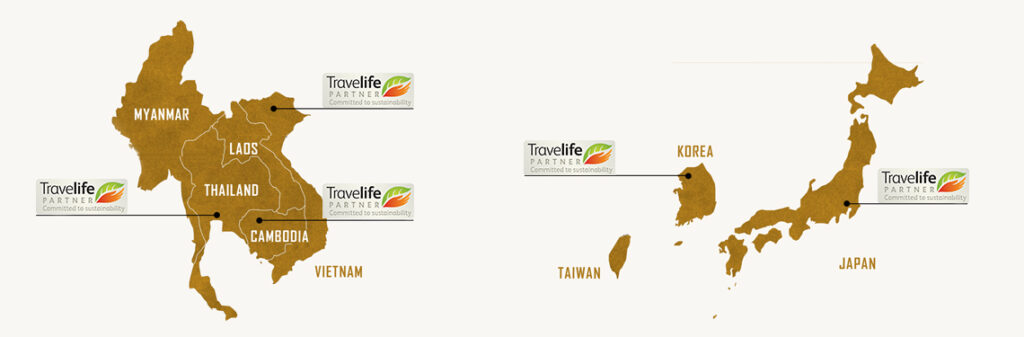
This framework provides a common governance backbone across destinations while reflecting different stages of implementation.
Internal Sustainability Structure
Sustainability coordination in 2025 included:
Sustainability responsibilities are integrated within Country Directors, Operations Teams and Travel Experts rather than treated as a standalone function.
Across destinations, Asia My Way progressively integrates waste reduction and plastic minimisation practices, adapted to local operational contexts and developed over several years.
Cambodia
Vietnam
Thailand
Vietnam office:
Group level:
These practices mark the progressive structuring of resource monitoring systems.
Internal Edu-Trip – Thailand (2025)
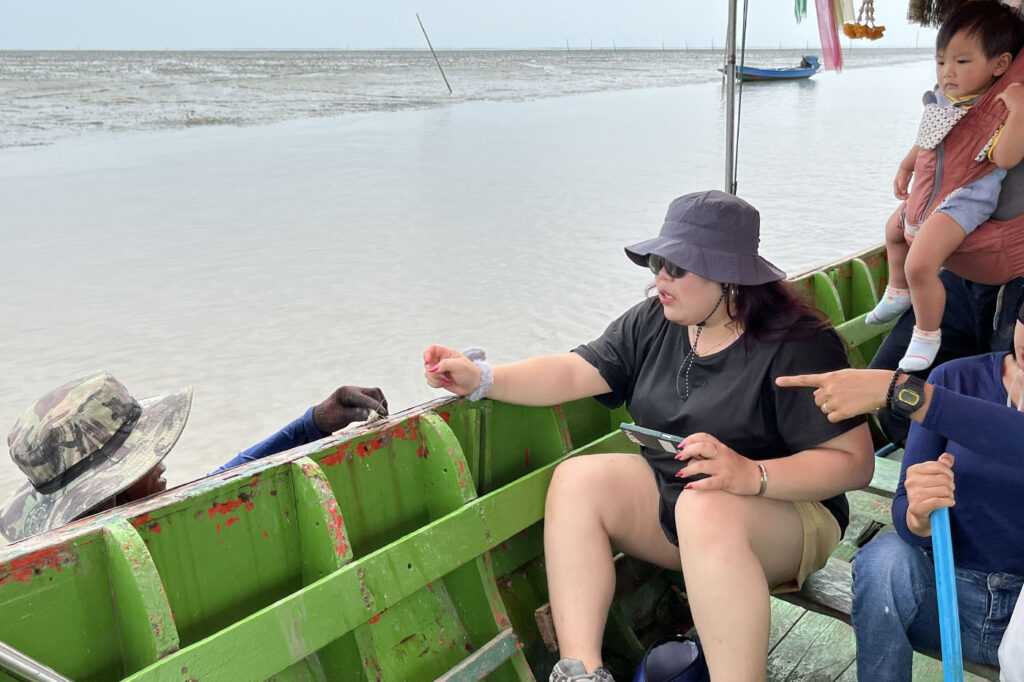
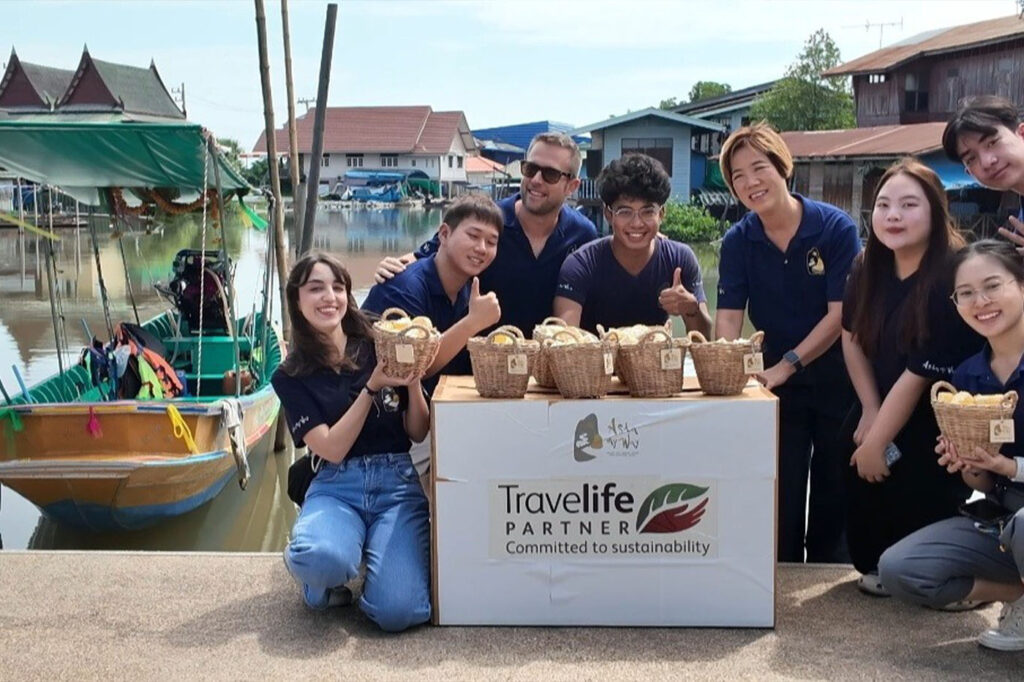
In May 2025, Asia My Way organised an internal Edu-Trip in Thailand involving the majority of the local team. The objective was to collectively review selected itinerary components, assess operational practices in real conditions and identify areas for sustainability improvement.
During a mangrove visit in Samut Songkhram, the team identified excessive reliance on single-use plastic bags. This observation led to the introduction of reusable locally crafted wicker baskets as an alternative for future operations.
Beyond the specific initiative implemented, the Edu-Trip reflects a field-based, collective and practical approach to continuous sustainability improvement.
Policy dissemination was achieved across all suppliers. Increasing survey participation and formal sign-off remains a focus area.
Tour Guides (39 total):
Drivers (18 total):
These figures highlight both structured policy dissemination and priority areas for 2026 capacity building.
These initiatives reflect engagement at both community and industry levels, contributing to broader sustainability dialogue across destinations.
EV-Based Itinerary – Cambodia
Development and testing of a fully electric vehicle itinerary designed to assess operational feasibility under real conditions.
Objectives included:
Scaling decisions will be evaluated during 2026.
EV Feasibility Testing – Thailand
Preliminary testing was conducted to assess electric vehicle range, operational practicability and traveller comfort within selected itinerary configurations. These tests contribute to evaluating future scalability of low-emission transport options.
Removal of High-Flight Itinerary – Vietnam
A 10-day North–Central–South Vietnam itinerary involving two domestic flights was discontinued. This reflects a product-level decision to reduce avoidable air transport where feasible.
Local Culture & Nature E-Booklet Guide
Development of a digital Local Culture and Nature Guide designed to encourage responsible traveller behaviour while reducing printed materials.
Rail & Low-Flight Promotion – Japan & Vietnam
Promotion of rail-based travel alternatives and development of no-plane itinerary concepts in selected destinations.
Carbon Transparency
Partnership with GreenTripper formalised in late 2025 to integrate carbon footprint estimation into itinerary design and provide transparent emissions data to travellers. Deployment begins in 2026.
GreenTripper (carbon footprint measurement) – agreement signed Q4 2025
Integration of carbon footprint estimation tools into itinerary design, with deployment beginning in 2026 to enhance transparency and emissions awareness.
Hotel Resilient (alignment initiated 2025, formalised early 2026)
Engagement with a global hospitality resilience network to strengthen dialogue on climate risk awareness and long-term environmental responsibility within the accommodation supply chain.
Wildlife Protection – Thailand
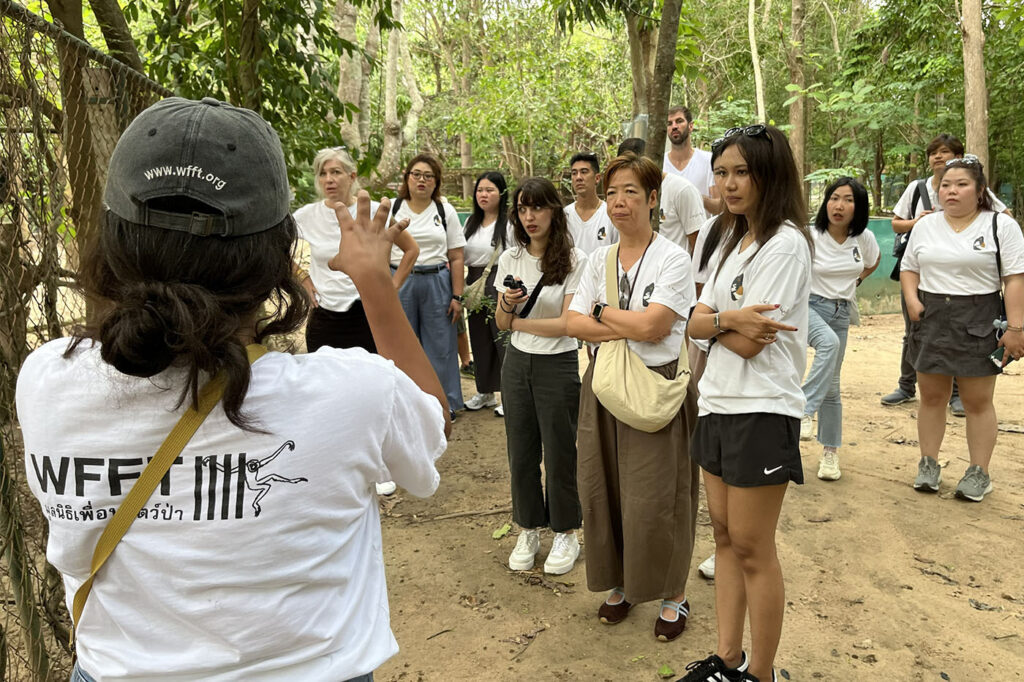
Partnership established with Wildlife Friends Foundation Thailand (WFFT), a wildlife protection NGO operating a rescue and rehabilitation centre.
This collaboration strengthens alignment with recognised animal welfare standards and enables the integration of responsible wildlife observation components into selected itineraries. Educational visits contribute to raising awareness among travellers regarding wildlife rescue and rehabilitation practices.
Where appropriate, accommodation at the WFFT eco-lodge allows guests to observe rescued wildlife from facilities designed to minimise disturbance, ensuring that conservation principles remain central to the experience.
These partnerships establish structural foundations for expanded environmental accountability and progressive integration of sustainability considerations across destinations.
Key structured developments during the reporting period included:
As of the end of 2025, four destinations operated under the Travelife Partner framework, reflecting a progressively harmonised sustainability governance structure across the group.
As Asia My Way continues to expand, sustainability integration will evolve accordingly.
Priority areas include:
Data collection systems and performance indicators will progressively be standardised across destinations.
Some partnerships were formalised in the final quarter of 2025, with operational deployment extending into 2026. Measurement frameworks remain in progressive development as part of a structured governance evolution.
Asia My Way remains committed to transparent, proportional and continuously improving sustainability practices across all destinations.
For questions, feedback or partnership inquiries regarding sustainability matters, please contact the Asia My Way Green Team at: [email protected]